Standing in My Own Way

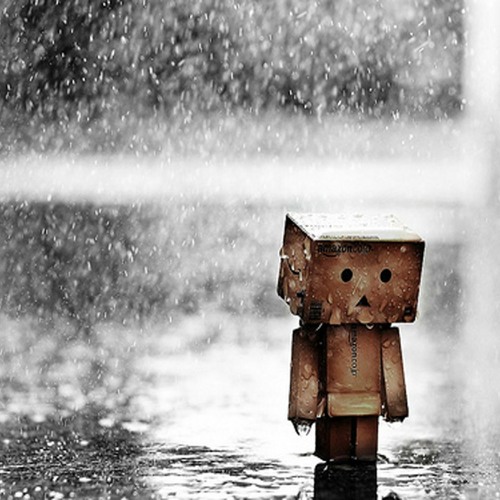
Amazon box person sad in the rain

Blelo evwebody.

It is rainy. It is always rainy these days. It does not feel like summer.

And I am doing it again. I am starting to feel like I am not writing enough. I feel like I should be more prolific. I keep beating myself up because I haven’t gotten around to writing those short stories floating around my head, or starting those other novels.

I also feel like I haven’t been published enough to be taken seriously. I looked at my “Published Work” page and although it makes me happy, I feel like it’s “not enough.”

Of course this is all nonsense, but I just want to do this author thing full-time and pump out lots of stuff and have people all over the world read it all and love it. ❤ That would be nice.

What I should do (instead of pouting), is just sit down and write something, gahdammit! The next time I think about one of those short stories, well golly gee, I might as well start writing the damn thing. :o| Makes sense, eh?

No one’s stopping me but me, after all.

Hope summer weather comes soon.

Happy writing,
-J

Flying High

img_20171215_081446_614-1828652593

Hey weberverse,

I’ve got some good news. My short science-fiction-western story, “The Bounty Hunter,” is going to be published in the April-ish edition of the sci-fi magazine, Bewildering Stories. How cool is that!? I’m very excited. I’ve sent some other pieces out, too, and I’ve received one “no,” but am still waiting on others.

Also some cool news. M is going to be designing the covers for my short story collection and The Novel That Will Get Me Published. So once he does that, I am going to self-publish them with Amazon. I’m thinking that’s another spring release. I’m not sure which one I’ll release first…

I’m also on new medicine and it’s working really well and I feel great. 🙂 In general, I feel really uplifted, positive, determined, grounded, and mindful. I know a lot of it is probably the medicine, but I also hope some of it is how much work I’ve been putting into fighting myself and trying hard to practice mindfulness. I’m also proud of myself for sending stories out and working to get my stuff published. Hurray for hard work and positivity!

Up, up, and away!

Wr.Tu.Th.: The End?

This Writing Tutorial Thursday has been a long time coming. (My fault. Sorry.) Finally, we’ve reached….THE ENDING.

Writing Tutorial: The End?

Disclaimer: The information presented herein is based on what I, personally, have learned in my educational and professional careers. This tutorial is simply meant to offer some helpful tips.

INTRODUCTION: You’ve done it; you wrote your novel. You—wait a minute! What about the ending?

Admittedly, I have such a hard time with endings. And it’s one of the most important parts! It’s where you tie everything up; where your resolution happens; where everything comes together. So how do you write one? Here are some tips that have helped me in the ending-writing process.

1)As mentioned, the ending is where you resolve the central conflict. It’s also where you tie up loose ends. Make sure you’ve fixed the problems, solved the issues, etc. You shouldn’t leave your readers confused and wondering, “Wait, so what about….?”

2) Nothing new. The ending isn’t the time to introduce a new, surprise character or subplot. Unless these things were foreshadowed in early chapters, they shouldn’t be included. They just make things confusing.

3) Let your reader do the imagining. Try not to get carried away with descriptions of “what happens after.” You don’t have to write a neat and tidy ending; you can certainly let your reader figure it out.

4) Make sure your ending mirrors something in the beginning (or at least ties back to a crucial part of your story). Did your main character grow emotionally? Did he/she learn something since the beginning? Accomplish something? Do that one thing you wanted them to do? Be sure your reader can recognize that your ending somehow relates to an earlier theme or idea presented in your novel.

Hopefully these will help you craft some stellar endings. Do you have any other suggestions? Questions? Let me know!

Keep practicing and happy writing!

Wr.Tu.Th: Character Development

It’s Writing Tutorial Thursday. Today we’re talking about creating really awesome characters.

Writing Tutorial: Character Development

Disclaimer: The information presented herein is based on what I, personally, have learned in my educational and professional careers. This tutorial is simply meant to offer some helpful tips.

INTRODUCTION:

What keeps us coming back to a story? It’s probably not the creepy house in chapter three (even though it was a damn good description). It’s the characters. Your story wouldn’t be anything unless there was a protagonist to relate to, root for (sometimes against), commiserate with, and follow.

So what makes a good character? How do you make one “come alive?” Well, I’m here to help answer those questions.

1) Know your characters. This doesn’t just mean what they look like. You should have detailed back stories for your characters—even the minor players. Make sure they’re well-developed. Yes, describe that they’ve got hair the color of cornstalks waving in the fall sunlight, but also describe who they are as a person. What are their dreams? Beliefs? Likes? Dislikes? Family history? Quirks? Eccentricities? Mannerisms? Think about who you are. How would you describe yourself or someone you know? That’s how you should be describing your characters.

Note: Don’t forget about your secondary characters. Giving life to many “background characters” is just as important. They might not need as detailed of a back story as your protagonist’s, but their existence needs to be just as believable.

2) Don’t pile it on. Think about character development like a five course meal. You wouldn’t want to eat all courses within the first ten minutes. That’d be crazy. Similarly, you don’t want to bombard your readers with every detail about your character in the first chapter (or paragraph).

Instead, pepper (get it? I’m continuing the food metaphor.) details about your characters throughout your story. Perhaps in the first paragraph you open with basic physical features, but it is not until chapter two that you reveal what your main character does for a living.

You may even choose to point out details as they pertain to the plot. For instance, maybe your story is centered on familial betrayal, and it isn’t until chapter ten that you let your readers know how many secrets your main character keeps from her family!

3) Make your readers care. It’s one thing to make your characters sound out-of-this-world attractive; it’s an entirely other thing to make them relatable to your readers. Ask yourself the question: “Why should my reader care about my character?” What’s your character’s objective? How do they get to that goal/point?

That’s usually where conflict comes in. (After all, if your story hasn’t any sort of action, it’s about as interesting as a used piece of gum.) How do your characters face internal and external conflict? You need to show how they overcome struggles and challenges. This is important in not only helping your characters to grow, but also in furthering your plot.

4) Remember dialogue. I love writing dialogue, so of course I’d put it on the list. But it’s true that it’s also very helpful in character development. How does your character talk? What does he/she sound like? Practice writing out things they would say. Do they have an accent? Do they have poor grammar?

(For more about writing convincing dialogue, stay tuned for next week’s tutorial!)

5) Pay attention. The best advice I can offer is to think about a favorite character from a favorite book. Why do you like that character so much? Is it because of his/her personality? Pay close attention to how the author presented him/her. Read, read, read. Take notes.

Do you have any other suggestions? Questions? Let me know!

And don’t forget: practice!

Happy writing!
WTT: Stuck?

It’s Writing Tip Tuesday. Today let’s talk about getting unstuck while writing a story.

Sometimes while writing a story chronologically, you suddenly get stuck. If that happens, try writing random scenes instead. Usually this helps me out. I’ll think of a scene that might happen fifteen or a few paragraphs later and scribble it out. Alternatively, write the ending first. Then it’s all about putting the pieces together.